Ignorance Studies: Selected Bibliography
This page curates a comprehensive list of essential literature within the field of Ignorance Studies. Our goal is to provide researchers and students with a structured gateway to the most significant works currently available in the global academic market.
- Legal Transparency & Referrals: All provided links direct users to official publishers (e.g., Routledge) or established retailers (e.g., Amazon). The inclusion of these titles is for educational and bibliographical purposes. Under international intellectual property norms regarding “Fair Use,” providing a citation and a direct link to a primary purchase source for the purpose of promotion and review does not require prior authorization from the copyright holders.
- Notice to Authors and Publishers: We hold the utmost respect for the intellectual property and preferences of creators. If any author or publisher wishes for their work to be removed from this bibliography, please contact us via email or our contact form. We will process such requests promptly.
Selected Works:
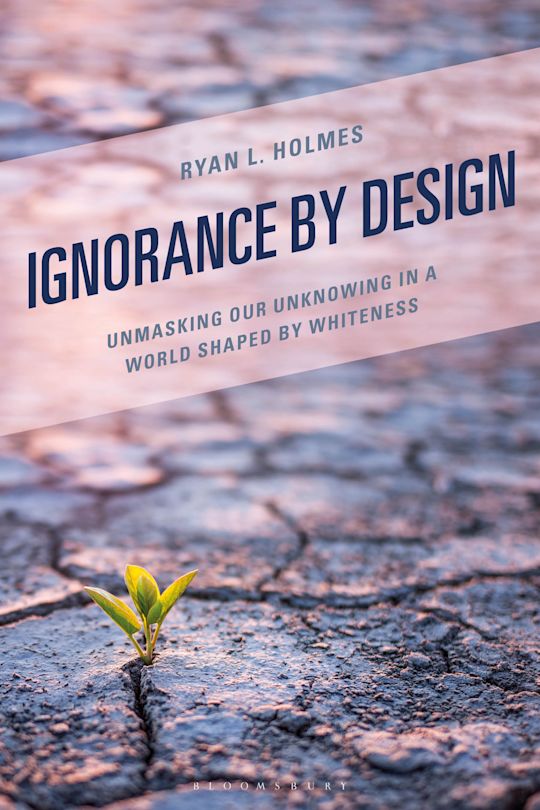
Ignorance by Design: Unmasking Our Unknowing in a World Shaped by Whiteness
Author: Ryan L. Holmes | Year: 2027 (Pre-order)
This volume conceptualizes ignorance as an active social force preserving racial and gender hierarchies. Mapping how active unknowing is embedded in institutional structures, language, and cultural narratives, Holmes links distinct modes of ignorance to systemic epistemic injustice, demonstrating how Whiteness operates as a dynamic epistemic project dictating credibility and knowledge.
Justice in the Age of Agnosis: Socio-Legal Explorations of Denial, Deception, and Doubt
Editors: James Gacek & Richard Jochelson | Year: 2024
This volume investigates how ignorance is constructed, enforced, and normalized within legal frameworks, criminal justice systems, and human rights discourses. Utilizing socio-legal analysis, the contributors analyze mechanisms of denial that uphold power dynamics and institutional amnesia, connecting agnotology directly to issues of witness testimony, systemic accountability, and state social control.
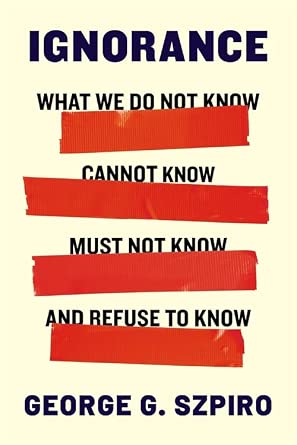
Ignorance: What We Do Not Know, Cannot Know, Must Not Know, and Refuse to Know
Author: George G. Szpiro | Year: 2026
This work categorizes ignorance into four distinct domains: what is unknown, unknowable, forbidden, or deliberately ignored. Across sixty diverse case studies (from dark matter to the placebo effect), Szpiro demonstrates the generative aspect of non-knowledge, illustrating how awareness of ignorance serves as a fundamental catalyst for intellectual curiosity, scientific progress, and social cohesion.
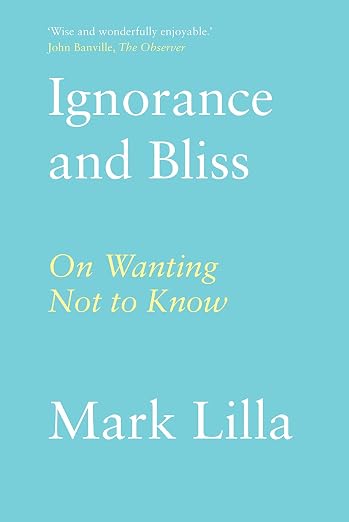
Ignorance and Bliss: On Wanting Not to Know
Author: Mark Lilla | Year: 2024
This study explores the persistent human desire to avoid knowledge. Spanning biblical narratives, classical philosophy, Sufi parables, and modern psychoanalysis, Lilla traces why people idealize innocence, submit to dogmatic authority, and long for pure origins. He reveals core paradoxes of self-deception and demonstrates why presenting facts alone fails to change entrenched beliefs.
How Should We Rationally Deal with Ignorance? A Philosophical Study
Author: Nadja El Kassar | Year: 2025
This volume examines the nature of ignorance and formulates a rational response to it. Developing an integrated framework that spans doxastic, attitudinal, and structural dimensions, the author draws on classical and modern figures (including Socrates, Locke, and Kant) to propose a maxim-based normative strategy, applying it directly to democratic and medical spheres.
Ignorance Unmasked: Essays on Agnotology, Epistemic Harm, and the Politics of Knowledge
Editors: Robert N. Proctor & Londa Schiebinger | Year: 2026
A major collection of essays continuing the intellectual project of the 2008 volume Agnotology: The Making and Unmaking of Ignorance. It examines how ignorance is produced, disseminated, and sustained across climate science, public health, algorithmic misinformation, deepfakes, data obsolescence, free-market ideology, the gun industry, environmental harm, and historical erasure. The contributors explore how knowledge is obscured or suppressed, and how addressing such ignorance can expand human liberties and planetary health.

The Psychology of Ignorance
Author: Michael Smithson | Year: 2026
Michael Smithson develops a psychological account of ignorance, examining its nature, causes, and consequences. He explores how people perceive and attribute ignorance, how ignorance affects decision-making and emotion, why people sometimes choose not to know, and how ignorance can be created through secrecy, misinformation, and censorship.

Apisteology: The Study of Not-Believing
Author: Jack David Eller | Year: 2024
This book unites the burgeoning scholarly literature on not-believing in various disciplines into a proposed new field of apisteology. It demonstrates that not-believing (like not-knowing) is a worthy and distinct subject and not merely a vacuum where belief (like knowledge) is lacking. Key reading for scholars and students across the social sciences and humanities.
Observations on Modernity
Author: Niklas Luhmann (Trans. William Whobrey) | Year: 1998
Focus: Chapter 5: “The Ecology of Ignorance”
Luhmann argues that scientific and social progress do not reduce ignorance but continuously reproduce it in new forms. Using social systems theory, he shows that every expansion of knowledge creates new horizons of uncertainty and unobserved possibilities. Ignorance is therefore not a temporary deficit but a structural feature of modern society.
Stupid Idiots
Author: Lars Svendsen | Year: 2026
Lars Svendsen offers a philosophical examination of stupidity, idiocy, and their most dangerous combination: “stupid idiocy,” the thoughtless acceptance of flawed thinking. Distinguishing between not thinking and thinking badly, he explores how these habits shape everyday life, public discourse, and political judgment, while suggesting ways to become less susceptible to them.

Ignorance: A Philosophical Study
Author: Rik Peels | Year: 2023
What is ignorance? Is it a mere lack of knowledge, or a distinct mental state? Rik Peels provides the first dynamic and comprehensive philosophical account of ignorance, investigating its nature, its various forms, and its profound impact on ethics and responsibility.
Ignorance: A Global History
Author: Peter Burke | Year: 2023
Renowned historian Peter Burke offers a sweeping survey of ignorance throughout human history. He explores “forgotten” knowledge, the consequences of collective ignorance in disasters, and how different cultures have understood the boundaries of what can be known. A masterpiece of historical agnotology.

Routledge International Handbook of Ignorance Studies (2nd Edition)
Editors: Matthias Gross & Linsey McGoey | Year: 2022
Building on the revolutionary first edition published in 2015, this second edition remains the definitive academic map of the field. It features updated chapters on post-truth politics, machine ignorance, and the latest developments in agnotology. For any scholar at BIIS, this is the essential “Bible” for understanding how ignorance is produced, maintained, and navigated in the modern world.

Paradoxes of Media and Information Literacy
Authors: Jutta Haider & Olof Sundin | Year: 2022
In an age of surplus information, why does ignorance seem to increase? Haider and Sundin examine how the very tools we use to combat ignorance (like media literacy) can sometimes reinforce it. They look at the infrastructure of the internet and how “search” shapes our knowing and not-knowing.
Escape from Model Land: How Mathematical Models Shape Our World and Mislead Our Future
Author: Erica Thompson | Year: 2022
Erica Thompson delivers a vital critique of how modern society relies on mathematical and computer simulations to guide critical decisions, from climate change to economics. Thompson warns against the epistemic arrogance of staying within “Model Land”—the illusion that idealized mathematical environments perfectly match reality. She demonstrates that our over-reliance on these simulations generates profound institutional ignorance, as complex social factors and irreducible uncertainties are systematically ignored for the sake of mathematical convenience and predictability.
Calling Bullshit: The Art of Skepticism in a Data-Driven World
Authors: Carl Bergstrom & Jevin West | Year: 2020
Carl Bergstrom and Jevin West provide a vital toolkit for navigating the modern information ecology, focusing on how misinformation masquerades as rigorous quantitative data. The authors analyze how algorithms, big data, and flawed statistical charts are used to systematically manufacture public ignorance under the guise of scientific objectivity. This book offers a practical, modern approach to skepticism, teaching readers how to spot, dismantle, and call out sophisticated epistemic distortions in an increasingly data-swamped world.
The Knowledge Machine
Author: Michael Strevens | Year: 2020
Michael Strevens offers a philosophical account of the success of modern science, arguing that its reliability depends on a strict methodological constraint—an “iron rule” requiring scientists to focus on empirical testing while setting aside philosophical, theological, and aesthetic considerations. This disciplined separation, he argues, enables the production of robust and objective scientific knowledge.
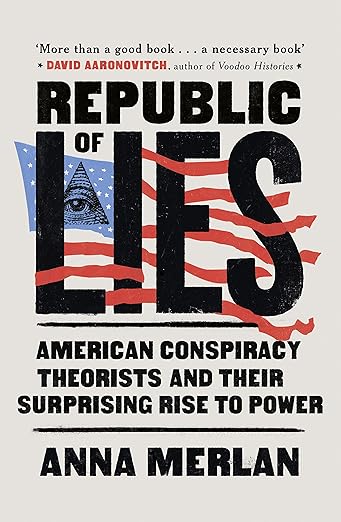
Republic of Lies: American Conspiracy Theories and Their Surprising Rise
Author: Anna Merlan | Year: 2019
Anna Merlan delivers an immersive, investigative analysis of the modern conspiracy theory industry and its rapid mainstreaming. Merlan demonstrates that the proliferation of alternative facts and institutional distrust is not an accidental feature of the internet era, but a calculated phenomenon exploiting structural inequalities and historical traumas. The book provides a crucial case study in contemporary agnotology, mapping how misinformation networks weaponize public ignorance for financial and ideological gain.
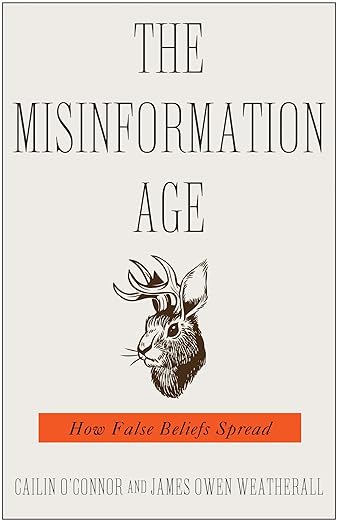
The Misinformation Age: How False Beliefs Spread
Authors: Cailin O’Connor & James Owen Weatherall | Year: 2019
Using mathematical modeling and social epistemology, the authors explain how false beliefs spread even when individuals are acting rationally. They demonstrate that our social networks can accidentally (or intentionally) foster ignorance, making it a collective rather than just an individual problem.
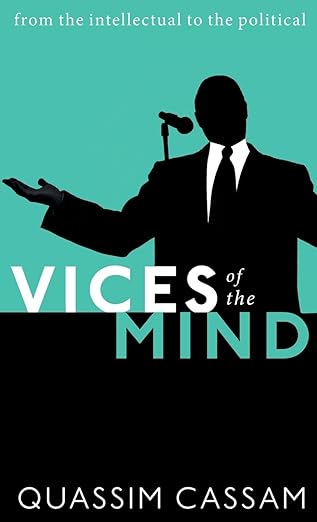
Vices of the Mind: From the Intellectual to the Political
Author: Quassim Cassam | Year: 2019
Cassam introduces “Epistemic Vices”—character traits like closed-mindedness, dogmatism, and intellectual arrogance that impede effective inquiry and lead to systematic ignorance. It is a vital contribution to “Virtue Epistemology” and explains how our own character can be the architect of our ignorance.
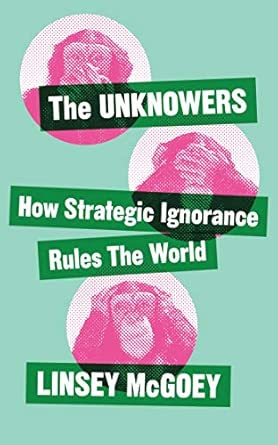
The Unknowers: How Strategic Ignorance Rules the World
Author: Linsey McGoey | Year: 2019
Linsey McGoey, a leading voice in sociology, examines “strategic ignorance”, the deliberate choice to not-know or to ignore information that might compromise power or profit. From corporate scandals to governmental neglect, this book shows that what we don’t know is often a carefully guarded privilege.
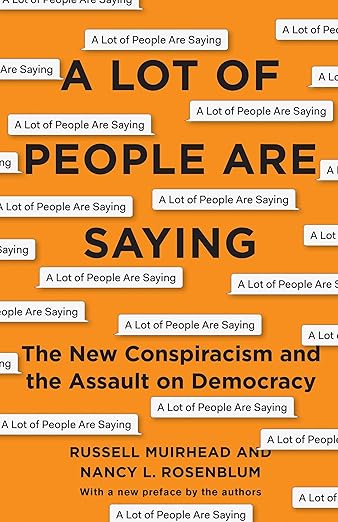
A Lot of People Are Saying: The New Conspiracism and the Assault on Democracy
Authors: Russell Muirhead & Nancy Rosenblum | Year: 2019
Russell Muirhead and Nancy Rosenblum identify a dangerous evolution in political discourse termed “the new conspiracism.” Unlike traditional conspiracy theories that attempted to construct elaborate alternative explanations with flawed evidence, this new form bypasses verification altogether, relying purely on insinuation, assertion, and repetition. The authors argue that this epistemic shift weaponizes public ignorance not to explain events, but to systematically delegitimize democratic institutions and dismantle the shared reality required for rational governance.
Post-Truth
Author: Lee McIntyre | Year: 2018
McIntyre provides a concise and powerful roadmap to the “Post-Truth” era. He argues that post-truth is not just about lying, but about an assertion of ideological supremacy over evidence. This book is essential for understanding how political will can intentionally bypass or suppress known facts.
The Ethics of Belief and Beyond
Editors: Sebastian Schmidt & Gerhard Ernst | Year: 2020
Sebastian Schmidt and Gerhard Ernst bring together contemporary essays on epistemic normativity and the ethics of belief. The volume explores rationality, epistemic responsibility, intellectual virtues, and the norms governing belief and other mental states, examining how failures in inquiry and judgment affect responsible belief-formation and human understanding.
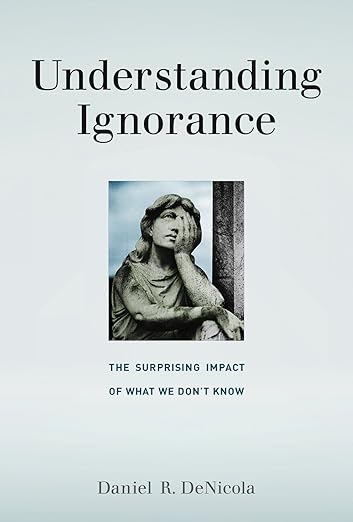
Understanding Ignorance
Author: Daniel R. DeNicola | Year: 2017
Daniel DeNicola explores ignorance not as a mere absence of knowledge, but as a complex and multidimensional phenomenon. Using spatial metaphors such as place, boundary, limit, and horizon, he analyzes different forms of ignorance, including willful ignorance, and examines its ethical significance in shaping and constraining human understanding.
The Knowledge Illusion: Why We Never Think Alone
Authors: Steven Sloman & Philip Fernbach | Year: 2017
Humans have mastered their environment because they collaborate. However, this book explains the “illusion of explanatory depth,” the fact that we think we understand complex systems (like toilets or economies) when we actually only know a tiny part, relying on the knowledge of others.
The Enigma of Reason
Authors: Hugo Mercier & Dan Sperber | Year: 2017
Mercier and Sperber provide a groundbreaking evolutionary theory of reason. They argue that reason didn’t evolve to help us find “truth” individually, but to help us justify our actions and evaluate the arguments of others in social groups—explaining why we are so prone to bias and collective ignorance.
The Death of Expertise: The Campaign against Established Knowledge and Why it Matters
Author: Tom Nichols | Year: 2017
Tom Nichols diagnoses a dangerous cultural shift where widespread access to information through internet technologies has fostered a defensive narcissism, leading citizens to reject established expertise and empirical data. Nichols demonstrates how this aggressive anti-intellectualism and flat leveling of authority erode the epistemic division of labor, resulting in a fragile political ecosystem where manufactured ignorance is weaponized as a badge of independence.
The Politics of Evidence-Based Policymaking
Author: Paul Cairney | Year: 2016
Paul Cairney critiques the idealized model of purely rational, evidence-driven policymaking. He shows that policymakers operate under conditions of bounded rationality and institutional constraints, where evidence is filtered through political priorities, organizational practices, and competing interpretations, shaping how knowledge is used in governance.
Weapons of Math Destruction
Author: Cathy O’Neil | Year: 2016
Cathy O’Neil examines how large-scale, opaque algorithmic models used in areas such as finance, education, and policing can reinforce existing inequalities. She argues that these systems often operate without sufficient transparency or accountability, and that their feedback loops can amplify bias and disadvantage over time.
The Black Box Society
Author: Frank Pasquale | Year: 2015
Frank Pasquale analyzes how algorithmic systems in sectors such as finance, healthcare, and technology operate as “black boxes,” limiting transparency and public scrutiny. He argues that this opacity produces significant information asymmetries and challenges traditional forms of accountability in contemporary digital societies.
Blindspot
Authors: Mahzarin R. Banaji & Anthony G. Greenwald | Year: 2013
Mahzarin Banaji and Anthony Greenwald examine the psychological roots of implicit bias through research on the Implicit Association Test. They show how unconscious stereotypes and automatic associations shape perception, judgment, and behavior, creating cognitive blind spots even among individuals who consciously reject prejudice.

The Epistemology of Resistance
Author: José Medina | Year: 2013
Medina explores how social and racial oppression creates “epistemic blindness.” He argues that those in power often benefit from a “willful ignorance,” while those at the margins develop a unique kind of epistemic friction that can resist these dominant structures of not-knowing.
Ignorance: How It Drives Science
Author: Stuart Firestein | Year: 2012
Stuart Firestein, a neuroscientist at Columbia University, argues that science is not about collecting facts, but about using facts to navigate the “high-quality ignorance” that remains. This book reframes not-knowing as the most important engine of scientific discovery.
The Republican Brain:The Science of Why We Don’t Believe Science
Author: Chris Mooney | Year: 2012
Chris Mooney examines the psychological mechanisms behind the rejection of scientific consensus. Drawing on cognitive science and political psychology, he shows how motivated reasoning, confirmation bias, and cultural identity shape the interpretation of evidence, often preventing factual information from changing strongly held beliefs.
The Honest Truth About Dishonesty
Author: Dan Ariely | Year: 2012
Dan Ariely examines the behavioral psychology of cheating and self-deception through a series of empirical experiments. He shows how cognitive biases, rationalization, and social context allow ordinary people to engage in small acts of dishonesty while still maintaining a positive moral self-image.

Golden Holocaust
Author: Robert N. Proctor | Year: 2012
Robert Proctor documents how the tobacco industry systematically obscured the health risks of smoking through long-term strategies of misinformation, selective funding of research, and public relations campaigns. He shows how scientific uncertainty was actively cultivated to delay regulation and shape public understanding.
The Information
Author: James Gleick | Year: 2011
James Gleick traces the history of information theory from language and telegraphy to computers and the internet. He explores how the rapid expansion of information technologies transformed human communication, memory, and knowledge, while raising new challenges related to complexity, information overload, and the limits of human understanding.
The Folly of Fools
Author: Robert Trivers | Year: 2011
Robert Trivers develops an evolutionary account of deception and self-deception, arguing that the capacity to deceive others is enhanced by mechanisms that obscure truth from oneself. He explores how self-deception may confer adaptive advantages in social competition, including in politics, warfare, and interpersonal relations.

Science in a Democratic Society
Author: Philip Kitcher | Year: 2011
Philip Kitcher addresses the growing tension between scientific expertise and democratic values. He discusses how public ignorance of complex science creates a “division of epistemic labor” and proposes a model for how a well-ordered society can handle knowledge and non-knowledge.

Ignorance and Surprise: Science, Society, and Ecological Design
Author: Matthias Gross | Year: 2010
Matthias Gross explores the creative potential of non-knowledge. Instead of viewing ignorance only as a lack to be filled, he examines how “surprise” and the unknown can be integrated into scientific planning and ecological restoration, turning ignorance into a catalyst for innovation.
Merchants of Doubt
Author: Naomi Oreskes & Erik M. Conway | Year: 2010
A landmark investigative history that reveals how a small group of scientists obscured the truth on issues ranging from tobacco smoke to global warming. It demonstrates how “manufactured doubt” is used as a tool to create public ignorance and stall political action.

Science, Policy, and the Value-Free Ideal
Author: Heather Douglas | Year: 2009
Heather Douglas challenges the “value-free ideal” in science, showing how scientific uncertainty and ignorance require social and ethical values to fill the gap. This book is essential for understanding how “not-knowing” in science impacts public policy and risk assessment.
Agnotology: The Making and Unmaking of Ignorance
Editors: Robert N. Proctor & Londa Schiebinger | Year: 2008
Widely considered the book that launched Ignorance Studies as a formal discipline. It introduces “Agnotology” as the study of culturally induced ignorance, especially the deliberate production of doubt by industry and government interests.

World at Risk
Author: Ulrich Beck | Year: 2009
A seminal sociological work on how modern society manages global threats. Beck argues that we now live in a “world risk society” where the consequences of our technologies are often unknown. This book explains the fundamental link between institutionalized “non-knowing” and the management of global crises.
The Right to Know
Author: Ann Florini | Year: 2007
Ann Florini examines the global movement toward greater transparency in governance and international institutions. She argues that access to information is essential for accountability and effective public oversight, and analyzes how secrecy and limited disclosure shape political and economic decision-making in a globalized world.

Epistemic Injustice
Author: Miranda Fricker | Year: 2007
Miranda Fricker introduces the concept of epistemic injustice, examining how social power can wrong individuals in their capacity as knowers. She distinguishes testimonial injustice from hermeneutical injustice, showing how prejudice and unequal interpretive resources can marginalize groups and create persistent gaps in collective understanding.
The Mismeasure of Man
Author: Stephen Jay Gould | Year: 1981 (revised edition: 1996)
Gould critiques historical attempts to measure human intelligence, showing how scientific methods were often shaped by social prejudice and flawed assumptions. He argues that many “objective” measures of intelligence were influenced by bias, revealing how scientific practices can systematically produce ignorance under the appearance of empirical rigor.

States of Knowledge: The Co-production of Science and the Social Order
Author: Sheila Jasanoff | Year: 2004
In this foundational work of Science and Technology Studies (STS), Jasanoff explores how our knowledge (and our ignorance) of the world is intertwined with how we choose to live and govern ourselves. It provides the essential framework for understanding how social orders and scientific “facts” are co-produced.
The Demon-Haunted World: Science as a Candle in the Dark
Author: Carl Sagan | Year: 1995
Carl Sagan’s classic work is an eloquent defense of scientific skepticism and rational thought against the rising tide of pseudoscience, superstition, and manufactured ignorance. Introducing his famous “baloney detection kit,” Sagan provides readers with the critical thinking tools necessary to distinguish between empirically verified knowledge and deceptive myths, framing scientific literacy as a core requirement for a free and democratic society.
Manufacturing Consent: The Political Economy of the Mass Media
Authors: Edward S. Herman & Noam Chomsky | Year: 1988
Herman and Chomsky argue that mass media in liberal democracies systematically filter information through economic, political, and institutional constraints. This “propaganda model” explains how consent is manufactured not through overt coercion but through structural biases that shape public perception and sustain selective ignorance in democratic societies.

Whose Science? Whose Knowledge?
Author: Sandra Harding | Year: 1991
Harding argues that scientific knowledge is socially situated and shaped by power relations, challenging the ideal of value-neutral science. She shows how marginalized perspectives can reveal forms of systematic ignorance embedded in dominant epistemologies, making “strong objectivity” possible only through the inclusion of diverse social standpoints.
The Golem: What Everyone Should Know About Science
Authors: Harry Collins & Trevor Pinch | Year: 1993
Collins and Pinch show that science is not a purely rational or infallible enterprise but a complex social practice shaped by uncertainty, negotiation, and interpretation. Through case studies, they demonstrate how scientific knowledge often involves ambiguity and error, revealing the inherently fallible and constructed nature of scientific understanding.

Risk Society: Towards a New Modernity
Author: Ulrich Beck | Year: 1986 (English edition: 1992)
Beck argues that modern societies have shifted from distributing wealth to distributing risk. Scientific and technological progress generates global, often invisible hazards that are difficult to fully know or control. This “risk society” produces institutionalized uncertainty, where ignorance becomes a structural feature of modernity and governance.
Age of Propaganda
Authors: Anthony Pratkanis & Elliot Aronson | Year: 1991
Anthony Pratkanis and Elliot Aronson examine the psychological mechanisms of persuasion and propaganda in modern society. They show how political campaigns, advertising, and mass media exploit cognitive biases and emotional responses, shaping public belief and influencing perception, judgment, and decision-making on a large social scale.
Science as Social Knowledge
Author: Helen Longino | Year: 1990
Helen Longino argues that scientific objectivity is achieved socially through critical interaction rather than individual neutrality alone. She demonstrates how background assumptions and cultural values shape inquiry, and how the absence of diverse criticism can allow bias, partial perspectives, and unchallenged assumptions to persist within scientific research.
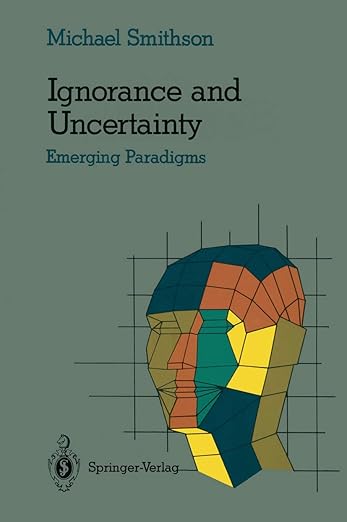
Ignorance and Uncertainty: Emerging Paradigms
Author: Michael Smithson | Year: 1989
Michael Smithson’s pioneering work provides a comprehensive interdisciplinary framework for analyzing ignorance and uncertainty. Moving beyond the traditional view of ignorance as a mere vacuum or lack of knowledge, Smithson develops a taxonomy of non-knowledge, demonstrating how ignorance is socially constructed, managed, and utilized across different fields of human inquiry and institutional governance.
Why People Believe Weird Things: Pseudoscience, Superstition, and Other Confusions of Our Time
Author: Michael Shermer | Year: 1997
Michael Shermer explores the parameters of human gullibility and the cognitive mechanisms that lead rational individuals to embrace pseudoscientific claims, superstitions, and conspiracy theories. By analyzing how the brain seeks patterns and constructs comforting myths, Shermer demonstrates how epistemic vulnerabilities can generate systematic ignorance, offering a powerful case for scientific skepticism and evidence-based thinking.
Science in Action
Author: Bruno Latour | Year: 1987
Bruno Latour shifts attention from “ready-made science” to science in the making. By tracing laboratories, instruments, and scientific controversies, he shows how scientific facts are gradually stabilized through networks of actors, practices, negotiations, and material technologies rather than emerging as purely objective discoveries.

Knowledge and Social Imagery
Author: David Bloor | Year: 1976
David Bloor’s influential work established the “Strong Programme” in the sociology of scientific knowledge. He argued that both true and false beliefs should be explained symmetrically through social causes, challenging the assumption that only error, irrationality, or failed knowledge require sociological explanation.
The Logic of Failure
Author: Dietrich Dörner | Year: 1996
Dietrich Dörner examines why people often fail when managing complex and dynamic systems. Through simulations and cognitive analysis, he shows how oversimplification, limited feedback awareness, and poor systemic thinking produce unintended consequences, revealing the cognitive limits of human decision-making under conditions of uncertainty and complexity.
The Social Construction of Reality
Authors: Peter L. Berger & Thomas Luckmann | Year: 1966
Berger and Luckmann argue that social reality is not simply discovered but continuously constructed through human interaction, institutions, and shared meanings. Their influential work established the foundations of the sociology of knowledge, showing how societies organize both knowledge and ignorance through everyday processes of legitimization and socialization.

Conjectures and Refutations
Author: Karl Popper | Year: 1963
Karl Popper argues that scientific knowledge advances through bold conjectures and rigorous attempts at refutation rather than through certainty or verification. The book established fallibilism as a central principle of modern science, emphasizing that awareness of error and ignorance is essential to rational inquiry and intellectual progress.
The Structure of Scientific Revolutions
Author: Thomas Kuhn | Year: 1962
Thomas Kuhn’s landmark work transformed the philosophy of science by arguing that scientific progress is not purely cumulative or rational. Through the concept of “paradigm shifts,” Kuhn demonstrated how scientific communities can become structurally blind to anomalies, making ignorance and resistance to new knowledge central features of scientific development.
The Open Society and Its Enemies
Author: Karl Popper | Year: 1945
Karl Popper’s seminal work bridges epistemology and political philosophy, arguing that because human knowledge is fundamentally fallible, societies must remain “open” to criticism and change. He critiques the “closed society” and its reliance on claims of absolute truth, demonstrating how the recognition of our own ignorance is the only secure foundation for freedom and rational progress.